How a Leading Coffee Chain in China Accelerated Management Decisions and Reporting with Dynamics 365 Business Central
Tectura
.
July 28, 2026

Overview

A globally renowned coffee brand founded in London has deeply penetrated top-tier cities across China. To elevate consumer experiences through local campaigns and diverse channels, the group sought a digital upgrade to unify its financial systems, supply chain, and data platforms across four operating companies in China.

The Challenge

The enterprise struggled with missing historical data and highly complex retail integrations that delayed strategic decision-making.

  • Missing Historical Data: A lack of documentation for the legacy system meant core processes and integration logic had to be painstakingly rebuilt from scratch.
  • Complex Retail Integrations: The massive volume of retail data required extensive interface development and rigorous validation to prevent errors.
  • Disconnected Management: Relying on fragmented Kingdee and New Grand systems prevented a unified financial view, severely delaying management decisions.

Solution & Implementation

The customer partnered with Tectura to deploy Dynamics 365 Business Central as its unified management platform.

  • Balancing global corporate standardization with highly specific local retail operational needs.
  • Integrating seamlessly with multiple external systems including VC, HEX, Seeplin, and CBS to unify business, capital, and data flows.
  • Leveraging a proven retail implementation methodology to ensure a controlled and high-quality system rollout.

Results & Impact

Area Before After
Financial Efficiency Fragmented financial systems caused prolonged manual consolidations. Core processes were automated, shortening the month-end closing cycle by roughly 2 days.
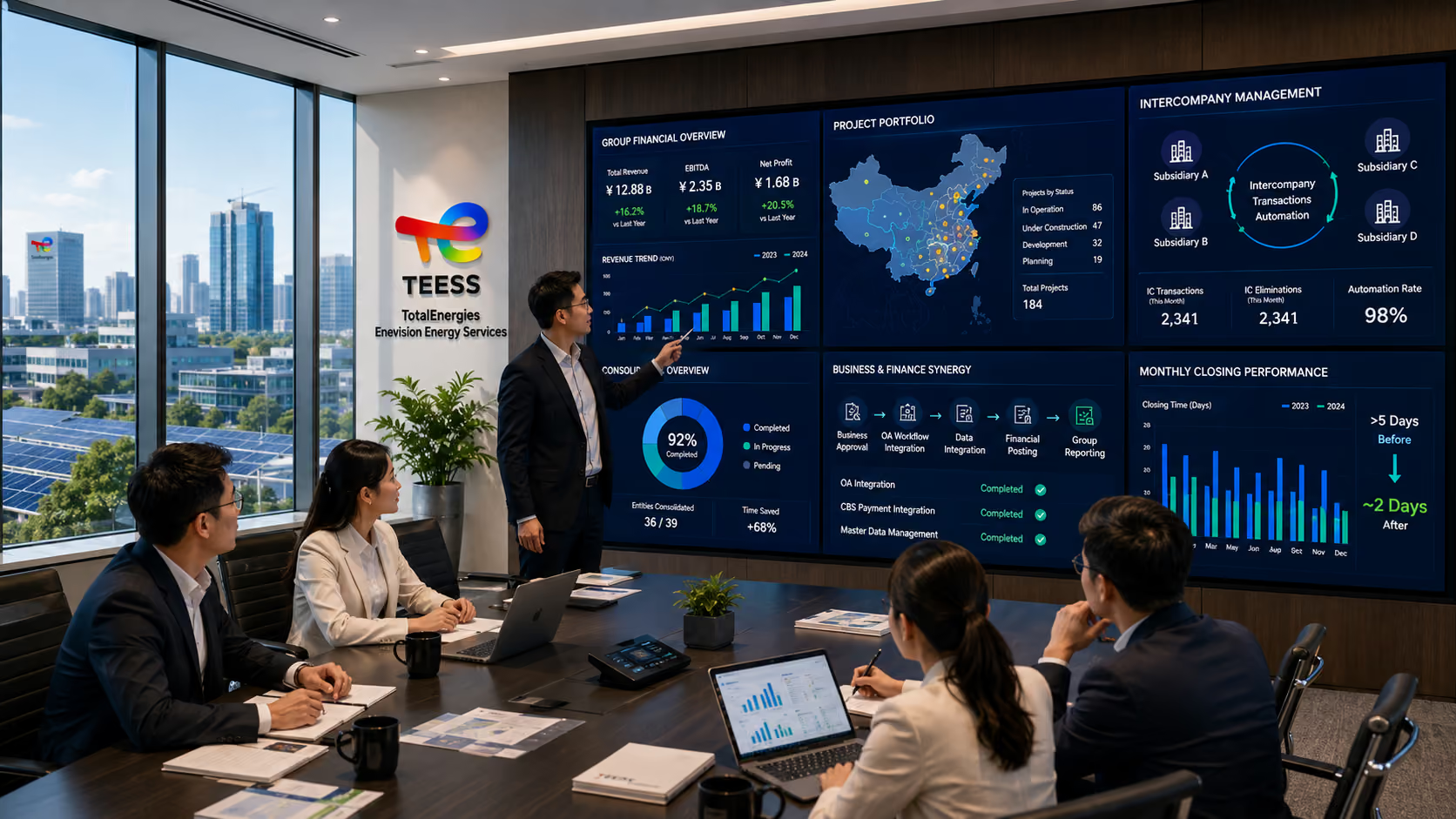
Decision Making Scattered data led to significant delays in executive reporting. Automated document flow shortened the management decision cycle by 40–50%.
Inventory Visibility Sales teams lacked real-time insights into stock levels. Real-time inventory tracking empowered teams to prevent stockouts and overselling.
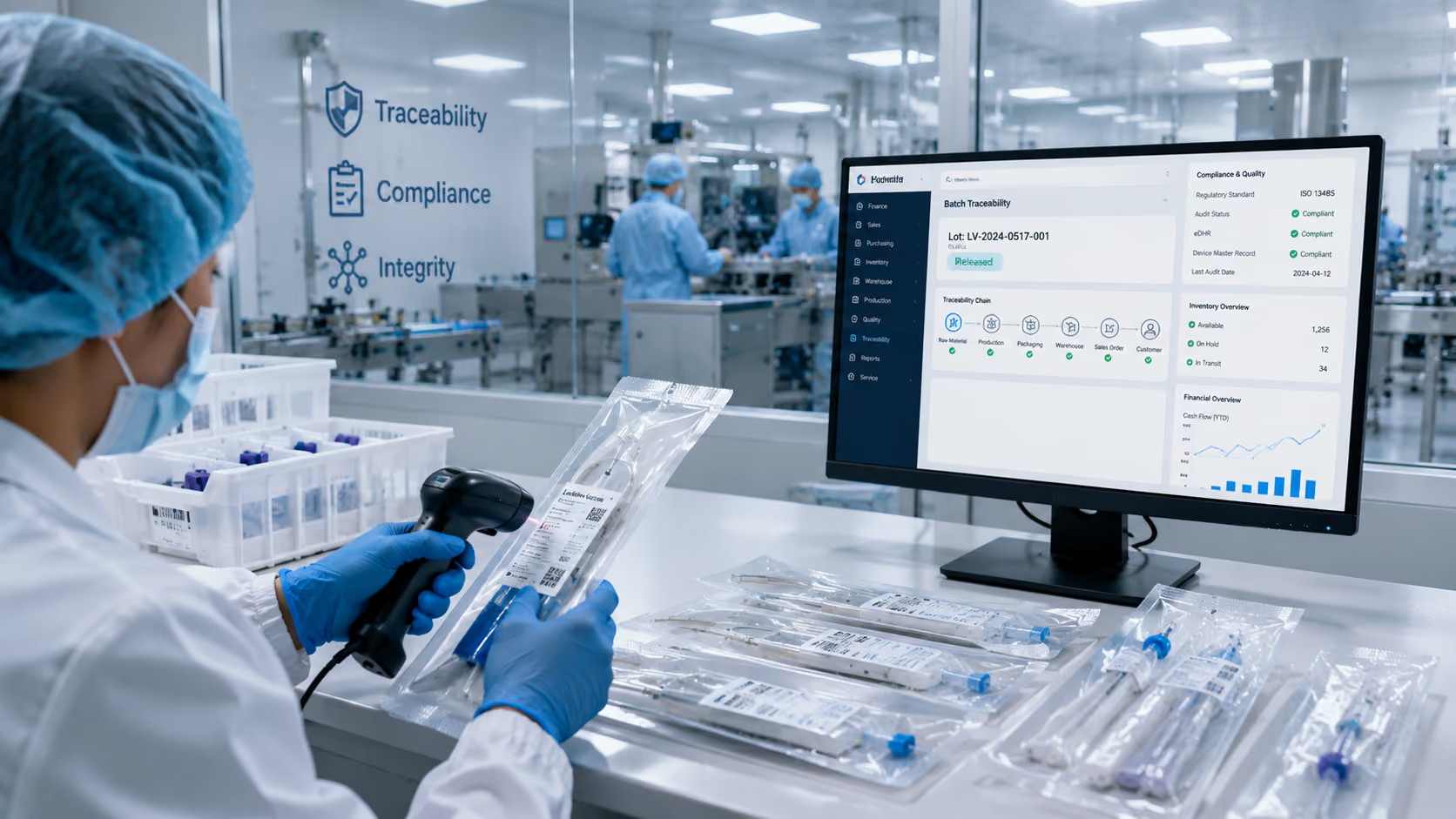
Data Transparency Retail operations suffered from isolated data islands. A unified data hub established full traceability and enhanced overall compliance.

By implementing Dynamics 365 Business Central, the customer successfully drove a digital upgrade across four companies, achieving a comprehensive elevation in reporting, compliance, and decision-making efficiency while perfectly adapting to local retail scenarios.

For multi-location retail chains, unifying financial and operational data is the key to agility. Learn how an integrated ERP can connect disparate retail systems into a single, actionable source of truth.

Facing similar data or legacy system challenges in your organization?

Tectura Hong Kong supports organizations navigating complex data and system transformations.

Talk to Our Team
Start a conversation about your data challenges
Learn More >
See More Customer Stories
Read more real-world transformation stories.
Learn More >
Frequently Asked Questions
What were the major data challenges faced by this coffee chain in China?

The customer faced missing historical documentation, highly complex retail data structures, and fragmented financial software that hindered a unified view.

Which external systems were integrated with the new ERP?

Business Central was seamlessly integrated with essential local systems such as VC, HEX, Seeplin, and CBS to unify all workflows.

How did the transformation impact decision-making?

By providing real-time data and automated document flows, the system shortened the strategic decision cycle by up to 50%.

How did Dynamics 365 Business Central improve inventory management for the customer?

Business Central provided real-time inventory visibility across retail operations, enabling teams to monitor stock levels more accurately, reduce stockouts, and prevent overselling.

What was the biggest operational improvement achieved through the implementation?

One of the most significant improvements was the creation of a unified management platform across four operating companies, which accelerated reporting, improved data transparency, and shortened management decision cycles by 40–50%.