How A Leading Beverage Manufacturer Built a Unified National Operations Platform with Dynamics 365
Tectura
.
July 28, 2026

Overview

A leading beverage manufacturer operates an extensive network of 26 breweries and 7 trading companies, managing multiple local and international beer brands. To support its massive scale and drive profound supply chain efficiency, the enterprise embarked on a mission to build a unified national operations platform capable of replacing a deeply fragmented IT landscape.

The Challenge

The manufacturer's reliance on diverse local IT systems across multiple breweries prevented the rollout of standardized national protocols.

  • Unstandardized Processes: Diverse local systems (Kingdee, UFIDA, etc.) across 26 factories prevented the rollout of standardized cost and management protocols.
  • Fragmented Integrations: Crucial peripheral systems like DMS and TMS required custom point-to-point integrations for every single factory, wildly inflating costs and timelines.
  • Management Blind Spots: The highly fragmented infrastructure made it nearly impossible for headquarters to swiftly consolidate data and gain operational transparency.

Solution & Implementation

A leading beverage manufacturer partnered with Tectura to deploy Dynamics NAV (which later evolved to Business Central) as the unified core ERP platform across all national entities.

  • Standardizing core business workflows ranging from production and quality management to sales and distribution.
  • Building a comprehensive digital ecosystem by seamlessly integrating the core ERP with WMS, DMS, TMS, TPM, HRM, and SRM systems.
  • Deploying a scalable architecture where external systems could be integrated once and replicated nationally without repetitive development.

Results & Impact

Area Before After
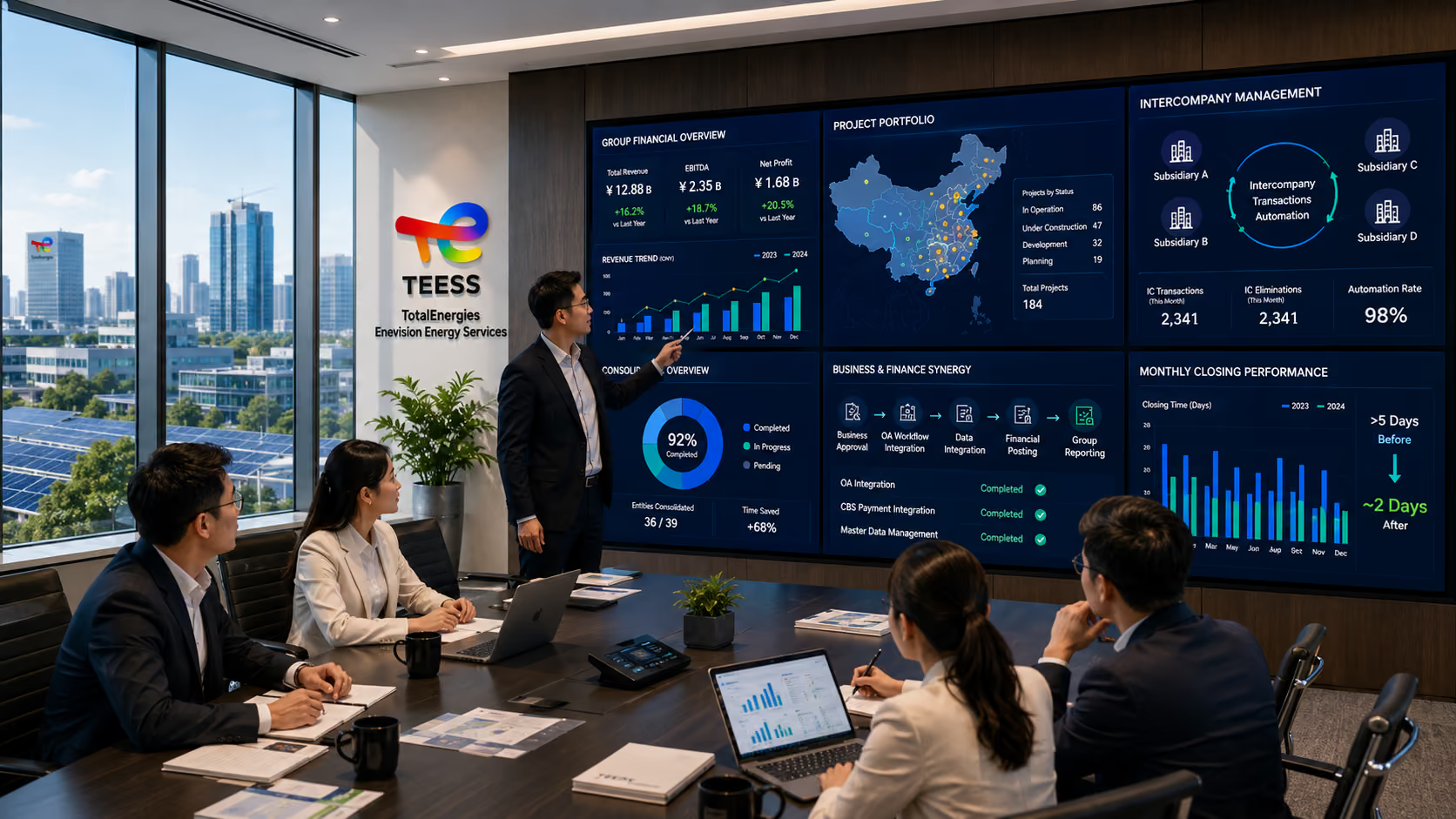
Standardized Finance Factories used inconsistent cost methods, delaying consolidation. Unified cost accounting was rolled out nationally, dropping month-end closing from >5 days to roughly 2 days.
Scalable Ecosystem Peripheral integrations had to be uniquely developed for each factory. Integrations were built centrally and rapidly deployed across all factories without repetitive coding.
Operational Agility Warehouse inventory suffered from severe tracking delays during peak seasons. WMS paired with PDA devices drastically improved warehouse efficiency and real-time inventory accuracy.

A leading beverage manufacturer built a unified national operations platform with Dynamics, successfully standardizing multi-factory operations and synergizing its complex multi-brand supply chain to support long-term digital transformation.

For massive multi-factory operations, standardizing workflows is the foundation of scale. See how a unified ERP hub eliminates redundant integrations and drives immediate operational transparency.
Facing similar data or legacy system challenges in your organization?

Tectura Hong Kong supports organizations navigating complex data and system transformations.

Talk to Our Team
Start a conversation about your data challenges
Learn More >
See More Customer Stories
Read more real-world transformation stories.
Learn More >
Frequently Asked Questions
What were the main issues with the prior IT landscape?

Each of the 26 breweries was operating on disparate local software, rendering national standardization of costs and processes impossible.

How did the integration strategy save time and money?

By establishing Dynamics as the core hub, peripheral systems (like WMS or TMS) only needed to be integrated once before being seamlessly rolled out to every factory.

What measurable improvements were seen in the finance department?

By standardizing accounting practices nationally, headquarters gained immediate transparency, and the month-end closing cycle was cut from over 5 days down to approximately 2 days.

How did Dynamics help A leading beverage manufacturer standardize operations across multiple breweries?

Dynamics NAV was deployed as the core ERP platform across 26 breweries and 7 trading companies, enabling standardized financial management, supply chain processes, production operations, and reporting practices throughout the organization.

What role did system integration play in the project’s success?

By creating a centralized integration architecture, a leading beverage manufacturer connected WMS, DMS, TMS, TPM, HRM, and SRM systems to the ERP platform once, allowing integrations to be replicated across facilities without repetitive development efforts.