How TEESS Achieved Group-Level Control and Financial Synergy with Dynamics 365
Tectura
.
August 3, 2026

Overview

TotalEnergies Enevision Energy Services (TEESS) is a leading comprehensive new energy service enterprise in China, focusing on distributed solar and renewable solutions. Facing rapid expansion in projects and operations, the company critically needed a scalable global ERP to achieve strict group-level financial synergy and control.

The Challenge

Rapid project growth severely outpaced the legacy system's ability to support centralized financial accounting and group management.

  • Efficiency Bottlenecks: The legacy UFIDA system relied heavily on manual data consolidation, severely limiting efficiency and accuracy.
  • Disconnected Workflows: A lack of integration between core operations and the OA system created massive manual workarounds and workflow breakpoints.
  • Slow Consolidation: Inefficient report consolidation and clumsy intercompany transaction processing severely delayed executive decision-making.

Solution & Implementation

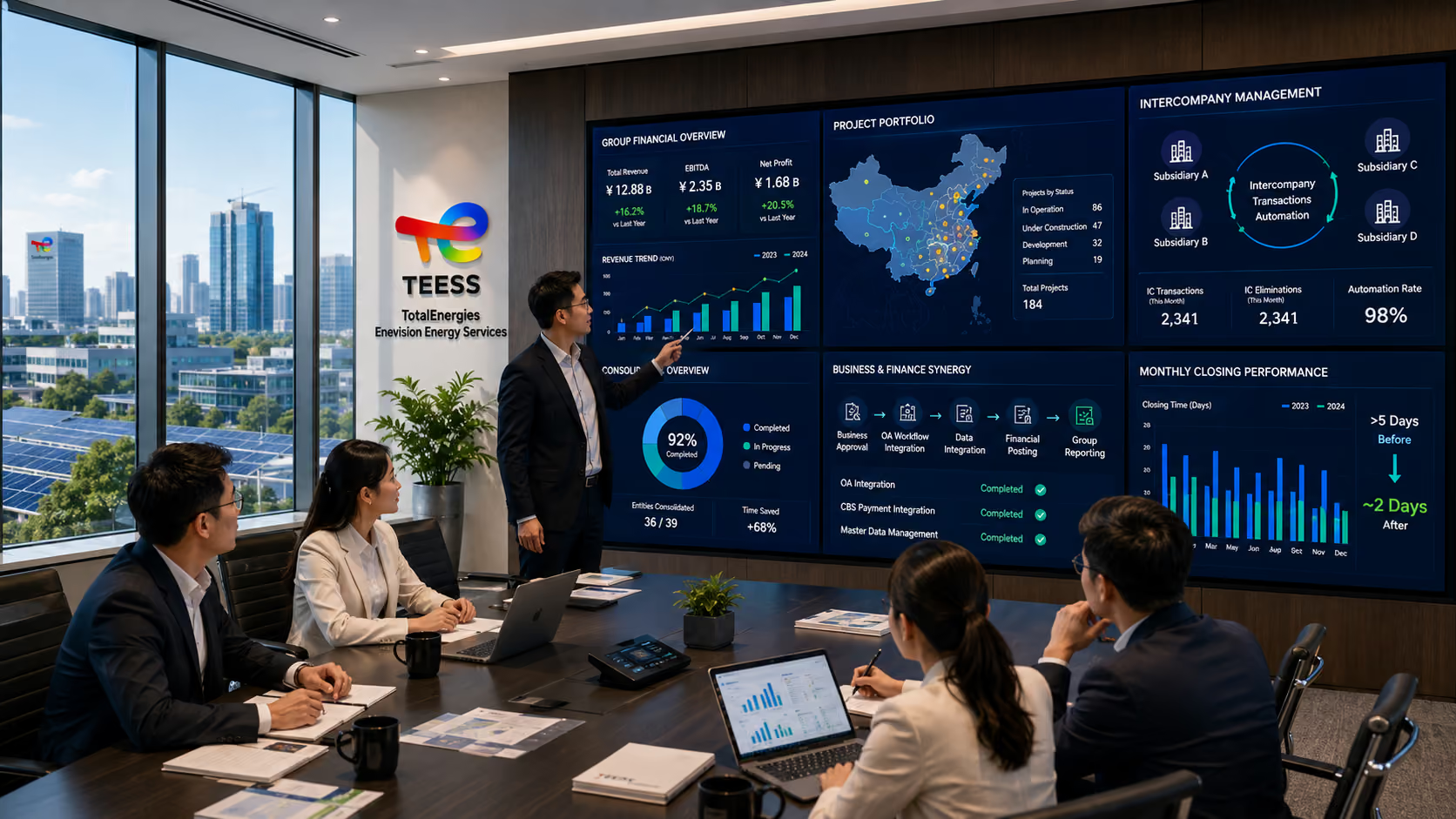
TEESS collaborated with Tectura to deploy Microsoft Dynamics 365 to serve as a unified financial and operational platform.

  • Leveraging powerful built-in Intercompany (IC) and Consolidation capabilities to drastically simplify complex group financial processes.
  • Integrating deeply with existing OA and CBS systems to achieve an end-to-end data flow spanning from business approvals to final financial posting.
  • Establishing unified master data management to guarantee data integrity across all subsidiary entities.

Results & Impact

Area Before After
Financial Automation Financial vouchers and payment triggers relied on heavy manual entry. Real-time sync of OA billing data automated payment triggers, slashing manual voucher entries.
Rapid Consolidation Processing subsidiary transactions and monthly closing was notoriously slow. Automated Intercompany (IC) transactions improved monthly closing speed and overall corporate compliance.
Synergized Operations Core business processes and financial approvals were completely disconnected. Centralized CBS payment workflows and unified master data management comprehensively elevated business-finance synergy.

TEESS successfully built a unified financial and operational platform with Dynamics, achieving robust group-level control and financial synergy tailored perfectly to the refined management demands of the new energy sector."

For fast-growing energy and infrastructure enterprises, manual financial consolidation is a severe growth bottleneck. Learn how automating intercompany transactions and unified data management drives immediate strategic agility.

Facing similar data or legacy system challenges in your organization?

Tectura Hong Kong supports organizations navigating complex data and system transformations.

Talk to Our Team
Start a conversation about your data challenges
Learn More >
See More Customer Stories
Read more real-world transformation stories.
Learn More >
Frequently Asked Questions
What were the primary bottlenecks hindering the group's growth?

The legacy system required extensive manual data consolidation and completely lacked integration with the OA system, causing constant workflow breakpoints.

How did the new system accelerate the month-end closing process?

By utilizing native Intercompany (IC) and Consolidation tools, the platform automated cross-entity transactions and drastically simplified group-level reporting.

What external integrations were crucial to the project's success?

Seamlessly connecting the ERP with the existing OA and CBS platforms ensured an unbroken flow of data from operational approval straight to financial posting.

How did Dynamics 365 improve intercompany transaction management?

Dynamics 365 automated intercompany transaction processing and reconciliation, reducing manual effort, improving data accuracy, and accelerating financial consolidation across subsidiary entities.

What benefits did unified master data management provide?

Centralized master data ensured consistency across all subsidiaries, improved reporting accuracy, reduced duplicate records, and strengthened overall governance and compliance.