How CT Automotive Restructured Global Manufacturing Operations with an Integrated ERP Platform
Tectura
.
July 28, 2026

Overview

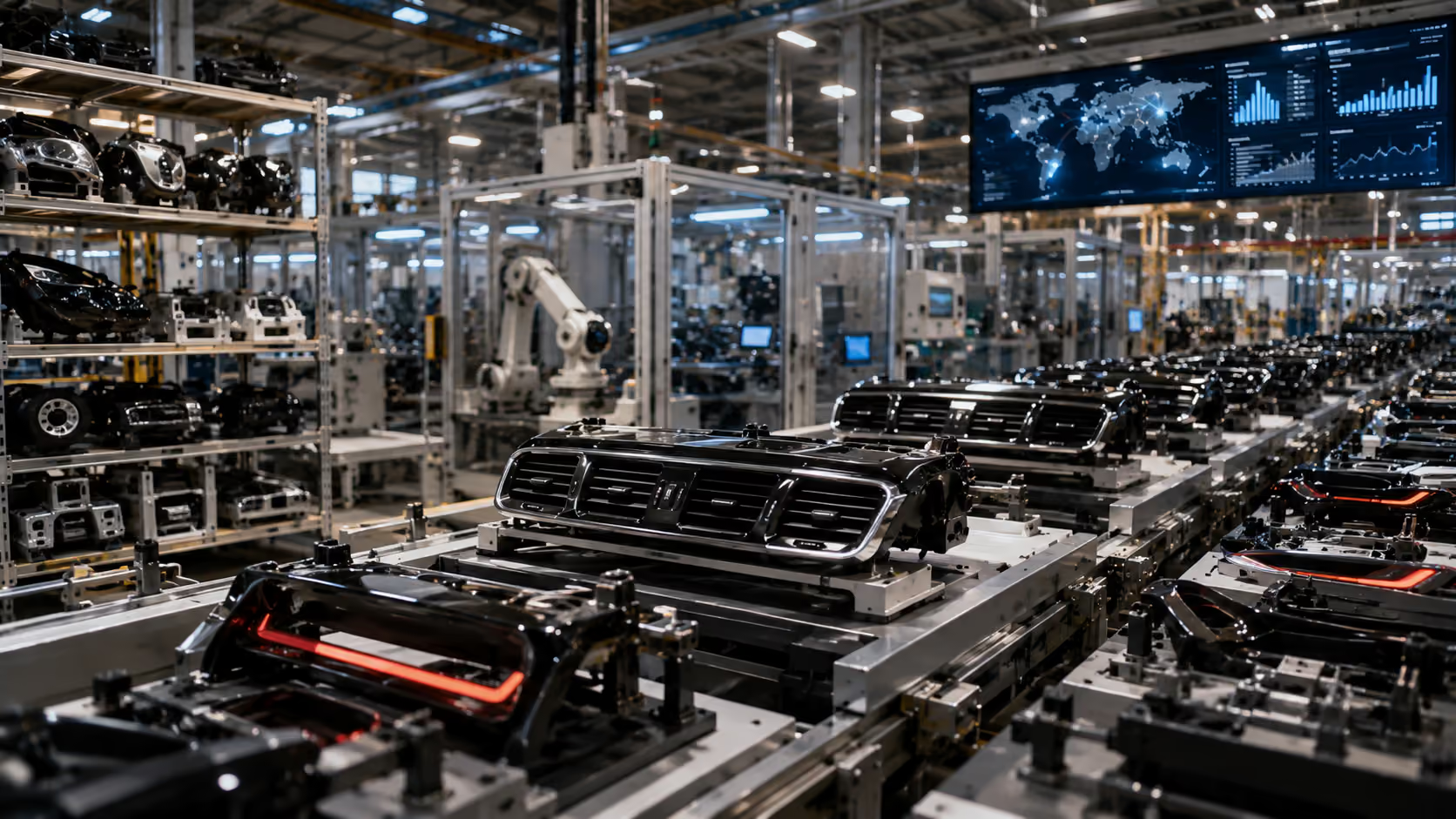
CT Automotive is a global automotive parts manufacturing group headquartered in the UK. With core manufacturing facilities in China supplying global OEMs, the enterprise needed to resolve severe system fragmentation to achieve unified, globalized operational synergy.

The Challenge

Fragmented IT architecture prevented the manufacturer from achieving the global operational visibility required by executive leadership.

  • Data Silos: SRM, MES, and PLM systems operated independently without a unified data foundation, severely obstructing supply chain collaboration.
  • High Manual Risk: Key business data required repetitive manual entry across different systems, causing inevitable data deviations and scheduling errors.
  • Refined Management Bottlenecks: A disconnected architecture fundamentally obstructed the multi-factory, multi-regional operational synergy demanded by the group.

Solution & Implementation

The manufacturer partnered with Tectura to deploy Dynamics 365 Business Central as its unified global data hub.

  • Developing robust interfaces to fully integrate the core ERP with existing peripheral SRM, MES, and PLM systems.
  • Utilizing flexible subscription models to tailor system functions specifically for various factory roles, optimizing overall usage costs.
  • Deploying multi-language and multi-currency configurations to support both localized operations and global management.

Results & Impact

Area Before After
Supply Chain Automation Supply chain data transfers relied on manual entry and reconciliation. SRM integration enabled real-time posting of orders and automated logistics tracking.
Production Synergy Production tracking and cost control suffered from delays. Real-time MES data fed directly into the ERP, allowing for precise capacity monitoring.
Data Integrity Disconnected systems fostered duplicate work and high error rates. System integration eradicated manual entry, eliminating data islands and boosting compliance.

CT Automotive utilized Business Central to completely restructure its global manufacturing digital footprint. By unifying multiple factories and disparate systems, we achieved seamless operational synergy that supports both global standards and local manufacturing scenarios.

For international manufacturers, disparate systems are the enemy of efficiency. See how a centralized ERP architecture seamlessly connects peripheral manufacturing systems into a unified intelligence platform.
Facing similar data or legacy system challenges in your organization?

Tectura Hong Kong supports organizations navigating complex data and system transformations.

Talk to Our Team
Start a conversation about your data challenges
Learn More >
See More Customer Stories
Read more real-world transformation stories.
Learn More >
Frequently Asked Questions
What specific systems were causing operational silos?

The company's SRM, MES, and PLM systems were running entirely independently, leading to massive manual data entry workloads.

How did the new ERP platform resolve this fragmentation?

Business Central was positioned as the central data hub, utilizing custom interfaces to connect the disparate systems into a unified operational flow.

How did the supply chain benefit from this integration?

By integrating with the SRM, order, logistics, and payment data were posted in real-time, completely automating supply chain reconciliation.

Why was system integration critical for CT Automotive’s global operations?

The company relied on multiple disconnected systems for supplier management, manufacturing execution, and product lifecycle management. Integrating these systems through Business Central created a unified operational environment that improved visibility, data consistency, and collaboration across manufacturing facilities.

How did the integrated ERP platform improve manufacturing efficiency?

Real-time integration between Business Central, MES, SRM, and PLM systems reduced manual data entry, improved production tracking, enhanced capacity planning, and enabled more accurate supply chain coordination across multiple factories.